Bedding · Mattress protection
Naturepedic and Obasan: How Organic Mattress Protection Materials Differ
A mattress protector can be a waterproof shield, a breathable layer for everyday wear, or a moisture-managing wool pad. Naturepedic and Obasan show how organic mattress protection can take different forms—and why the right choice depends on the spills, fit, feel, and care routine your bed actually needs.
Published November 15, 2026
There is no single definition of mattress protection. For one household, it means keeping a mattress safe from a spilled drink or a nighttime accident. For another, it means adding a washable buffer against perspiration, body oils, and ordinary wear. And for someone who prefers natural fibers, it may mean choosing a wool layer that helps manage moisture without a conventional waterproof membrane.
That distinction matters when comparing Naturepedic and Obasan. Naturepedic illustrates a cotton-based approach built around a waterproof barrier: layers of organic cotton surround a thin membrane intended to stop liquids while allowing some water vapor to escape. Obasan’s Organic Wool Moisture Pad Protector takes a different route, using felted organic wool to provide water resistance, with elastic straps to hold the pad in place.
These approaches answer different needs. A waterproof layer is designed to block liquid more directly. A wool moisture pad offers a natural-fiber surface with water-resistant protection, but it should not automatically be treated as equivalent to a fully waterproof protector. Understanding that difference is the first step toward choosing confidently—and avoiding the frustrating surprise of expecting one product to do the job of another.
First, what do you need protection from?
Before weighing materials or certifications, picture what happens in your bedroom. Is the main concern an occasional spill, a child’s bed, a pet that sometimes sleeps beside you, or the slow accumulation of sweat and body oils? Do you want a barrier that can be pulled off and machine washed, or are you comfortable with a more careful cleaning routine?
The answers determine whether you need a waterproof mattress protector, a moisture-resistant wool pad, or a simpler breathable layer. Those terms can sound interchangeable in product descriptions, but they describe different levels and styles of protection. “Waterproof” generally signals a barrier intended to prevent liquid from passing through when used as directed. “Water resistant” means a material can resist some moisture, but it does not promise the same performance in every situation. A breathable, non-waterproof pad can help protect against everyday wear while still allowing liquids to reach the mattress.
Neither style is universally better. A fitted waterproof protector may be the practical choice for a bed with frequent spill risk. A wool moisture pad may appeal to someone looking for natural materials, a soft surface, and water resistance for less demanding situations. A protector should be matched to the likely mess, not selected by a broad label alone.
Naturepedic’s cotton-and-membrane approach
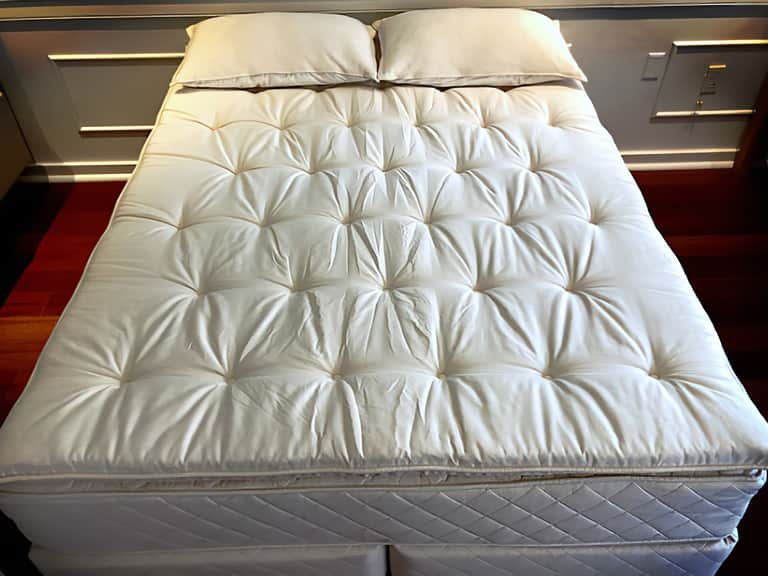
The Naturepedic-style construction described here sandwiches a thin waterproof membrane between two layers of organic cotton jersey. The cotton provides the fabric surface, while the membrane does the central job of blocking liquid. The construction is designed to combine a soft, stretchy feel with protection beneath the sheet.
This kind of organic mattress protector may suit a sleeper who wants a more definite barrier against spills and stains but does not want a rigid or crinkly-feeling cover. Breathability is part of the design brief: the membrane is described as blocking liquids while allowing some water vapor to escape. That distinction is useful. Breathable does not mean the protector has no waterproof layer; it means the construction aims to manage airflow and vapor while preventing liquid from passing through.
A fitted style is another practical feature of this approach. Rather than relying on corner straps, an elasticized skirt stretches around the mattress, helping the protector stay in place under a fitted sheet. Stretch can make installation straightforward, but fit still depends on mattress dimensions and depth. A thick mattress, pillow-top, or added topper can change how securely a fitted protector sits. Check the stated depth range against the complete height of the bed, not just the mattress core.
For households that expect regular laundering, cotton-and-membrane construction may offer a convenient maintenance rhythm if the particular product is machine washable. Always follow its care label: temperature, detergent, and drying instructions matter. Excessive heat or harsh treatment can damage some waterproof layers, even when the fabric itself seems sturdy. The product’s care directions—not a general rule for cotton—should guide each wash.
Obasan’s wool moisture pad: natural fibers, a different kind of defense
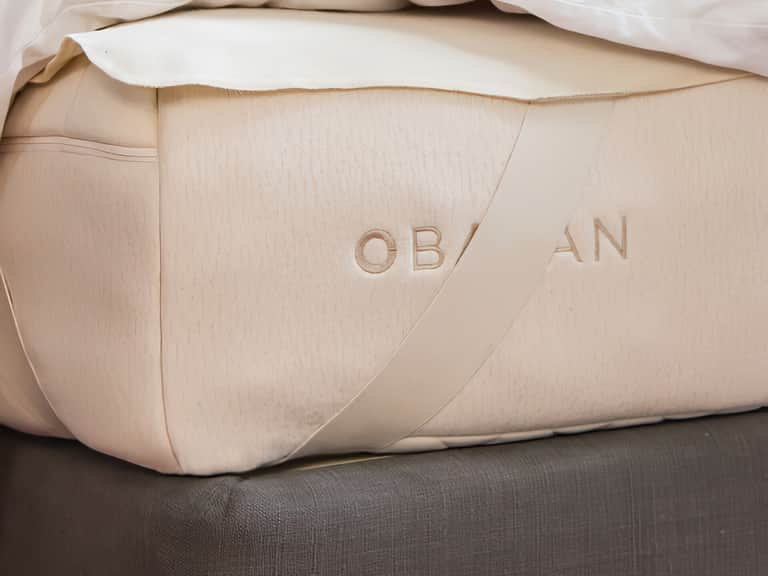
Obasan’s Organic Wool Moisture Pad Protector is made from organic wool described as water resistant. Its felted wool construction provides a different kind of mattress protection from a cotton pad with a waterproof membrane. Wool is valued in bedding for its moisture-managing qualities, and this pad’s role is to add a natural-fiber layer between the sleeper and the mattress.
The product uses elastic straps to secure the pad at the mattress, rather than a fitted skirt that wraps around the sides. That arrangement can be helpful when a sleeper wants a layer on the sleep surface without fully enclosing the mattress. It also means checking the dimensions and strap placement is especially important: a pad that shifts or fails to cover the area exposed to spills cannot provide reliable coverage where it is needed.
Wool’s water resistance should not be mistaken for a guarantee against every spill. If a large amount of liquid is left on the surface, if it saturates the material, or if it reaches an uncovered edge, the mattress may still be at risk. For recurring accidents or situations where dependable liquid containment is a priority, a purpose-built waterproof protector may be the more suitable option. The wool pad can be considered for water resistance and everyday moisture management, but it should not be assumed to deliver the same barrier as a membrane-backed product.
For those who prefer organic materials, the wool’s provenance and certification are also part of the product picture. Obasan describes its wool as GOTS-certified and sourced from sheep raised outdoors year-round in Argentina. Certification and sourcing claims are useful details to examine, but they do not replace checking fit, protection level, and care instructions. A material can align with a shopper’s values and still be the wrong functional match for a particular bed.
Care is one of the clearest differences. The Obasan pad can be aired outside when it needs freshening. For washing, the instructions call for hand washing in cold tap water or using a gentle machine cycle in cold water, followed by indoor hang-drying. The instructions specifically say not to put it in a dryer. That routine is more hands-on than simply tossing a machine-washable protector into a regular laundry load, so it is worth considering before purchase.
To explore the product’s listed specifications, see the Obasan Organic Wool Moisture Pad Protector. Its stated sizes range from Twin through California King, and the product information lists a three-year warranty. Confirm the current sizing and warranty terms with the seller before ordering.
A side-by-side look at the practical differences
| Consideration | Cotton with waterproof membrane | Obasan wool moisture pad |
|---|---|---|
| Main protection style | A membrane-backed barrier intended to block liquids. | Water-resistant wool protection; not automatically equivalent to waterproofing. |
| Surface materials | Organic cotton jersey on the outer layers, with a thin membrane inside. | Organic wool in a felted pad construction. |
| How it stays put | Fitted design with elastic around the mattress, depending on the specific model. | Elastic straps hold the pad to the mattress. |
| Care considerations | Follow the product’s wash and drying directions; membrane care is important. | Air to freshen; wash cold as directed and hang dry indoors. Do not tumble dry. |
| Potential fit | Shoppers who want a more direct liquid barrier and a fitted, washable design. | Shoppers who prefer wool and need water resistance for everyday moisture or occasional incidents. |
This comparison is about construction and intended function, not a laboratory ranking. Performance can depend on how a protector is fitted, how much liquid it encounters, and whether it has been cleaned and maintained according to directions. For a specific product, its current label and manufacturer guidance are the final word.
Fit can make or break mattress protection
Even a carefully chosen material cannot protect the mattress properly if the protector is too small, too loose, or positioned unevenly. Start by measuring the mattress length and width, then measure its depth from the base to the top of the sleeping surface. If a topper is part of the bed, include it in the height. Compare those measurements with the protector’s listed dimensions or pocket-depth range.
A fitted protector is generally wrapped around the mattress, so its pocket needs enough depth to cover the mattress without being stretched to its limit. A strap-secured pad rests across the top and is anchored at the corners. Straps can be convenient, but they may allow more movement than a fully fitted design, particularly on a restless sleeper’s bed or a mattress with a slippery cover.
After installation, smooth the surface and check that the corners remain secure. Then make the bed as usual and see whether the protector bunches, pulls away, or changes the feel of the mattress. A protector is meant to work quietly in the background. If it shifts during the night, it may need repositioning, a different fit, or a compatible sheet arrangement.
Comfort, temperature, and the feel under a sheet
Material choice affects more than the amount of liquid a protector can handle. It can also influence the way the bed feels. Cotton jersey is soft and flexible, while a thin membrane adds another layer inside the fabric. Wool creates a different surface and may add a small amount of cushioning. Neither description guarantees that every sleeper will experience the same temperature or texture.
People who sleep warm may be especially attentive to the layers beneath the fitted sheet. Look for clear descriptions of fabric, construction, and breathability rather than relying on a broad promise such as “cooling.” The mattress, sheets, room temperature, sleepwear, and personal comfort all contribute to how warm a bed feels. A protector is one part of that system, not a standalone temperature solution.
Likewise, a thinner protector is not automatically more comfortable, and a natural-fiber protector is not automatically more breathable in every setup. The weave, membrane, fill, and fit all matter. If you are sensitive to surface changes, pay attention to whether a design is described as stretch-knit, quilted, padded, or felted. These construction details can offer a more useful preview than the material name alone.
Organic claims and what to check
“Organic” is a helpful starting point, but shoppers should look for the details behind the word. Which part of the product is certified—the cotton shell, the wool, or the finished textile? Does the listing name the certification and explain its scope? Is the waterproof layer described separately from the organic fabric? These questions help clarify what the product is made of instead of leaving the whole construction under one broad label.
Material certifications do not tell you whether a protector is waterproof, whether it fits a particular mattress, or how it will feel to sleep on. Those are separate questions. A certified organic surface can be important to one shopper, while another may prioritize a reliable barrier and easy laundry care. A practical choice accounts for both the materials you want and the performance you need.
Which style makes sense for your sleep setup?
A cotton-and-membrane design is worth considering if your main priority is a more explicit defense against spills. It may be a sensible direction for a child’s bed, a guest room, or a mattress that needs protection from frequent accidents—provided the selected model fits and its care routine works for your household.
A wool moisture pad may be a better fit if you value a natural-fiber layer, want some protection against everyday moisture, and can manage the more careful cleaning instructions. It may also appeal to shoppers who prefer a pad secured with straps rather than a cover that encases or wraps around the mattress. But if your expectation is to stop substantial liquid from reaching the mattress, be cautious about treating water-resistant wool as a substitute for a waterproof barrier.
Neither choice should be selected solely because it is marketed as organic, breathable, or protective. Decide what “protection” means in your household, then compare product construction against that need. A good match is the one that offers the appropriate level of defense, sits securely on your bed, preserves the comfort you want, and can be maintained without becoming a chore.
A quick checklist before buying
- Identify the likely risk: spills, perspiration, stains, everyday wear, or a combination.
- Confirm whether the protector is described as waterproof or water resistant, and avoid treating those terms as interchangeable.
- Check mattress length, width, depth, and any additional topper height.
- Choose between a fitted design and a strap-secured pad based on how you want it to sit on the bed.
- Read cleaning directions before purchase, including restrictions on heat, detergents, and drying.
- Look for the specific material and certification details that matter to you.
- Review warranty terms and ask whether they cover only manufacturing defects or other kinds of wear.
The bottom line
Naturepedic and Obasan represent two distinct approaches to organic mattress protection. A cotton surface paired with a waterproof membrane is designed to provide a more direct liquid barrier. Obasan’s organic wool moisture pad offers water resistance through wool construction, with a strap-secured fit and a more careful washing routine.
The key is not to ask which material wins in every bedroom. Ask which construction suits your mattress, your likely spills, your comfort preferences, and the care you are willing to give it. When those details line up, a protector can do its quiet, useful work: keeping the mattress better shielded while letting the rest of the bed feel like your own.
Frequently asked questions
Is a wool mattress pad waterproof?
A wool pad may be water resistant, but that is not the same as a waterproof membrane-backed protector. Check the specific product description and choose based on the volume and frequency of liquid exposure you expect.
Does an organic mattress protector have to be all natural?
No. A product may combine organic cotton or wool with other components, such as a waterproof membrane. Review the construction and certification details to understand which materials are covered by an organic claim.
Can I put the Obasan wool moisture pad in a dryer?
The listed care instructions say not to tumble dry it. They recommend airing it to freshen, washing by hand in cold water or on a gentle cold machine cycle, and hanging it to dry indoors.
Should I choose a fitted protector or a pad with straps?
A fitted design wraps around the mattress, while a strap-secured pad rests across the top. Consider mattress depth, how much movement you expect, and which style is easiest for you to install and maintain.