Bedding Guide
Choosing a Wool Topper: Fill, Shell, and Care Considerations
A wool topper can bring a mattress a little more cushion and help manage moisture through the night. But the words “wool topper” don’t tell the whole story: fill, fabric, quilting, fit, and care instructions all shape how it feels—and how easy it is to live with.
Published October 14, 2026
If your bed feels a touch too firm, or you tend to wake up feeling warm or clammy, a wool topper may catch your eye. Wool has a reputation for being cozy, but its appeal isn’t limited to winter comfort. Depending on how a topper is made, its fibers can add gentle cushioning, absorb some moisture, and create a sleep surface that feels different from a thick foam layer.
Still, wool isn’t one uniform experience. A lightly filled quilted pad may feel quite different from a lofty topper with thick batting. A cotton shell can have a crisp, breathable hand, while a tightly woven fabric may feel smoother and more substantial. Some designs can be machine washed; others need professional care. The right choice is less about a label promising comfort and more about whether the details match your mattress, preferences, and household routine.
This guide breaks down the choices that matter: the type and amount of wool fill, the shell fabric, construction and attachment, thickness, mattress fit, and the care the topper will require. The aim is simple: help you decide what to look for before adding another layer to your bed.
First, know what a wool topper can—and can’t—do
A topper sits on top of a mattress, usually underneath a fitted sheet. Its job is to change the feel of the sleep surface, provide a modest layer of cushioning, or help protect the mattress from ordinary wear. A wool-filled topper can offer a softer, more cushioned feel, but the amount of change depends on its thickness, density, and construction.
Wool is also known for taking up moisture vapor, which may help the surface feel less damp for some sleepers. That is not the same as waterproofing. A wool topper should not be treated as a reliable barrier against spills, accidents, or other liquid exposure unless the maker specifically describes it as waterproof. If liquid protection is a priority, check the product’s construction and care guidance rather than assuming the natural fill will handle it.
A topper is not a fix for every mattress problem, either. A thin pad is unlikely to correct a mattress that is deeply sagging or structurally worn out. It can refresh the feel of a bed, but it cannot restore the support of a mattress that has lost its shape. Think of it as a comfort layer, not a replacement for the mattress beneath it.
Look closely at the wool fill
The fill is the heart of the topper. Product descriptions may simply say “wool,” but there can be meaningful differences in fiber source, processing, blend, and amount. The best description makes clear what is inside rather than relying on broad claims about natural comfort.
100% wool or a blend?
Some toppers use wool alone; others combine wool with plant-based or synthetic fibers. A blend may change the topper’s loft, resilience, weight, or washing instructions. Don’t assume that a wool blend is automatically less comfortable or that 100% wool is automatically the better fit. Instead, consider what the maker says about the fill’s composition and how the finished product is meant to feel and be maintained.
If you have a particular reason for seeking wool—such as preferring natural fibers or looking for a moisture-managing layer—check the percentage and type of every component. Ask whether the cover, thread, backing, or quilting includes other materials. These details can affect both the feel and the care routine.
Fill weight, loft, and cushioning
A topper’s advertised thickness can be useful, but it doesn’t tell you everything about its feel. How much fill is used, how evenly it is distributed, and how it is quilted all matter. A lofty design may feel more plush at first, while a flatter wool pad may make a subtler change to the mattress.
If you are trying to soften a firm bed, look for clear information about thickness and construction. If you mainly want a breathable layer with a little added comfort, a less lofty option may make more sense. When available, compare the product’s stated dimensions and fill details, not just a single “plush” or “supportive” descriptor.
Remember that wool is not the same as a springy foam. A wool topper may cushion the surface, but it is not necessarily designed to provide deep contouring or a dramatic change in pressure relief. Keep expectations grounded in the materials and construction described by the maker.
The shell is more than a finishing touch
The shell is the fabric enclosing the wool. Because it is the surface closest to your sheet—and, indirectly, to your body—it can influence how the topper feels, how air moves through it, and how securely the fill stays contained.
Cotton is a common shell choice in natural-fiber bedding. Its weave and weight can make a difference: a lighter fabric may feel more flexible, while a denser fabric can create a smoother, more substantial surface. Look for a specific fiber description and, if offered, information about the weave. A general claim such as “breathable” is less useful than details you can compare across products.
A tightly woven shell may help keep loose fibers contained, while a soft, flexible fabric may better conform to the mattress. Neither quality is automatically superior. The question is whether the topper stays comfortable under your sheets and whether its construction suits your priorities.
For shoppers who value sourcing or processing standards, certifications may help clarify specific claims. Read what a certification applies to—such as the fiber, fabric, or finished product—and what it actually verifies. A certification is a useful detail, but it does not by itself tell you whether the topper will feel right on your bed.
Construction shapes feel, stability, and durability
Even carefully chosen materials can behave differently depending on how they are put together. Quilting, baffles, seams, and attachment points help keep wool distributed across the bed. Without effective construction, fill may shift or bunch, leaving some areas flatter than others.
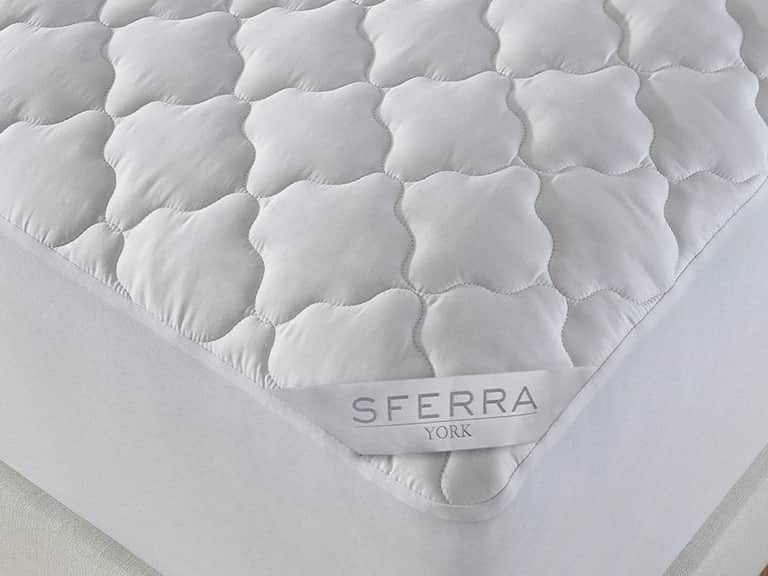
Quilted squares or channels divide the surface into sections, helping limit movement of the fill. The spacing and depth of those stitched sections can affect how evenly the topper lies and whether it feels smooth beneath a sheet. Baffled construction can create room for a loftier fill, but the product description should explain how the design is intended to work.
Attachment style deserves attention, too. Some designs use corner straps; others have elasticized sides or a fitted skirt. A topper that simply rests on the mattress may be easy to put on, but it can shift more readily depending on the bed and bedding. A secure fit can help keep the surface tidy, especially if you move around during sleep or have a mattress with a slick cover.
Check the mattress depth listed for the topper and compare it with your actual mattress. If the topper uses a skirt or fitted edge, confirm that it can accommodate the mattress height. Add the topper’s thickness when considering fitted-sheet depth: sheets that fit the mattress alone may become too shallow once a new layer is added.
Choose thickness with your bed in mind
Thickness is one of the easiest specifications to notice—and one of the easiest to misread. A thicker topper may add more cushioning, but it can also raise the bed, change the feel of your fitted sheet, and make it harder to tuck bedding neatly. A thinner wool layer may be easier to manage and may preserve more of the mattress’s original feel.
Before choosing, ask what you are hoping to change. Does the mattress feel too firm at the surface? Do you want a little extra softness without a dramatic transformation? Are you mainly interested in adding a protective or moisture-managing layer? Your answer can guide the amount of loft to seek—and can prevent you from choosing a plush topper when what you really need is a mattress with different support.
If you share a bed, it may help to discuss how much softness each person prefers. A full-bed topper changes the surface for both sleepers, so a thicker layer that feels inviting to one person may feel overly soft to another. When possible, review return terms and product guidance before making a decision, particularly if the feel is difficult to judge from specifications alone.
Care is a deciding factor, not a footnote
A wool topper can be a lovely addition to a bed, but its care needs may be quite different from those of everyday cotton sheets. Some wool-filled products are designed for machine washing; others call for spot cleaning, airing, or professional cleaning. The word “wool” alone cannot tell you which routine applies.
Read the care label before purchase and again before cleaning. Check the recommended water temperature, cycle, detergent, drying method, and whether the topper may be put in a dryer. If the instructions call for dry cleaning, don’t assume that a gentle home wash is an acceptable substitute. Heat, agitation, or improper drying can cause shrinkage, matting, uneven fill, or damage to the shell.
For a washable design, follow the directions exactly. A large topper may need a machine with enough capacity to move freely through the wash. Overcrowding can prevent a thorough clean and may strain the fabric or seams. Use only the recommended cycle and detergent, and make sure the topper is fully dry before putting it back on the bed. Damp fill stored or covered too soon may develop an unpleasant odor.
For a topper that is not machine washable, routine care may involve airing it according to the maker’s instructions and promptly addressing small marks with an approved method. Avoid vigorous scrubbing or soaking unless the care label permits it. Professional cleaning can be an option for some designs, but confirm that the cleaner can handle wool bedding and follow the product’s specific instructions.
A washable topper may suit busy households or anyone who expects to clean bedding frequently. A dry-clean-only design may still be appealing if its materials or construction fit your priorities, but be realistic about the extra effort and expense. The right care routine is the one you can actually maintain.
A practical checklist before you buy
When product descriptions start to blur together, use a short checklist to keep the decision focused. Compare each option against your own mattress, comfort goals, and willingness to care for it.
- Fill: Is it 100% wool or a blend, and is the material composition clearly stated?
- Feel: What thickness and loft are specified, and do they match the amount of cushioning you want?
- Shell: What is the cover made from, and are weave or sourcing details available?
- Construction: Does the quilting or baffling help hold the fill in place?
- Fit: Does the size match your mattress, including its depth and any unusual dimensions?
- Attachment: Are there straps, elastic, or a fitted skirt to help prevent shifting?
- Care: Is it washable, spot-clean only, or dry-clean-only—and does that routine suit your life?
- Purpose: Are you buying for cushioning, moisture management, mattress protection, or some combination?
If a key detail is missing, look for a full specification or contact the maker before ordering. Clear information about fill, fit, and cleaning is more valuable than a string of broad comfort promises.
Common assumptions to leave behind
“Wool is automatically hot.” Wool is often associated with warmth, but the feel of a bed depends on the whole setup: fill amount, shell, sheets, mattress, room temperature, and personal preference. A breathable construction may feel different from a dense, heavily filled one. If you sleep warm, prioritize clear construction details and avoid assuming that all wool layers feel alike.
“Natural means maintenance-free.” Natural fibers still need appropriate care. Wool can be sensitive to heat and rough handling, and a topper’s shell and construction may have their own limitations. Follow the care label rather than relying on a general idea of how wool behaves.
“A topper protects against every spill.” A wool topper may help shield a mattress from ordinary wear, but it is not necessarily waterproof. For meaningful liquid protection, choose a product explicitly designed and described for that purpose, and consider how it will layer with the topper.
“More thickness always means more comfort.” Extra loft may feel luxurious, but comfort is personal, and too much cushioning can alter the way your mattress feels. Consider your current bed and the specific change you want, rather than treating thickness as a measure of quality.
The bottom line on choosing a wool topper
A good wool topper is a thoughtful match between material, construction, and everyday habits. Start with the feel you want, then compare fill composition, loft, shell fabric, quilting, attachment, and mattress fit. Those practical details will tell you more than a broad promise of softness or year-round comfort.
Then give care instructions equal weight. If easy laundering is essential, seek a design specifically made to be washed and confirm the full process. If a topper requires professional care, decide in advance whether that is manageable. Either way, treat the label as part of the product—not paperwork to glance at after a stain appears.
With the right expectations, wool can be a considered way to add a little cushioning and help manage moisture on the sleep surface. Take time to compare the details, choose a topper that fits your mattress and routine, and let comfort—not a single material claim—guide the final call.
Frequently asked questions
Does a wool topper make a bed softer?
It can add cushioning, but the result depends on the fill amount, thickness, quilting, and the mattress underneath. A topper may adjust surface comfort; it is not a reliable solution for a mattress that is sagging or worn out.
Can I wash a wool topper at home?
Only if its care instructions allow it. Some wool-filled toppers are machine washable, while others require airing, spot cleaning, or professional care. Check the label before washing, and follow its directions for water, detergent, cycle, and drying.
Is a wool topper waterproof?
Not unless it is specifically designed and described as waterproof. Wool may take up some moisture vapor, but that does not make a topper a liquid barrier. Review the construction details if spill protection is important.
How do I stop a topper from shifting?
Look for a design with corner straps, elasticized edges, or a fitted skirt, and confirm that it suits your mattress size and depth. Correct sizing and secure bedding can also help keep the sleep surface neat.